A free resource from Migraine World Summit
Hormones and headache: understand your migraine cycle
If your worst attacks land around your period, you are not imagining the pattern. Learn what drives hormonal migraine across every life stage, and get a free 5-step plan you can take to your next appointment.

of women in our national survey say their attacks are predictable. Most are never shown how to act on it.
Common, predictable, and still overlooked
Menstrual migraine is a specific, recognized condition with its own triggers and treatments. Yet most women are told it is just part of having periods. The data shows how much that costs.
lose three or more days every cycle — roughly 36+ days a year
miss work or school, or lose productivity, around their period
feel anxiety or dread before their period starts
“My symptoms were dismissed for years. I was told it was all in my head, or just part of normal periods. It is real.”
— National women's migraine survey respondent
It often comes down to a drop in estrogen
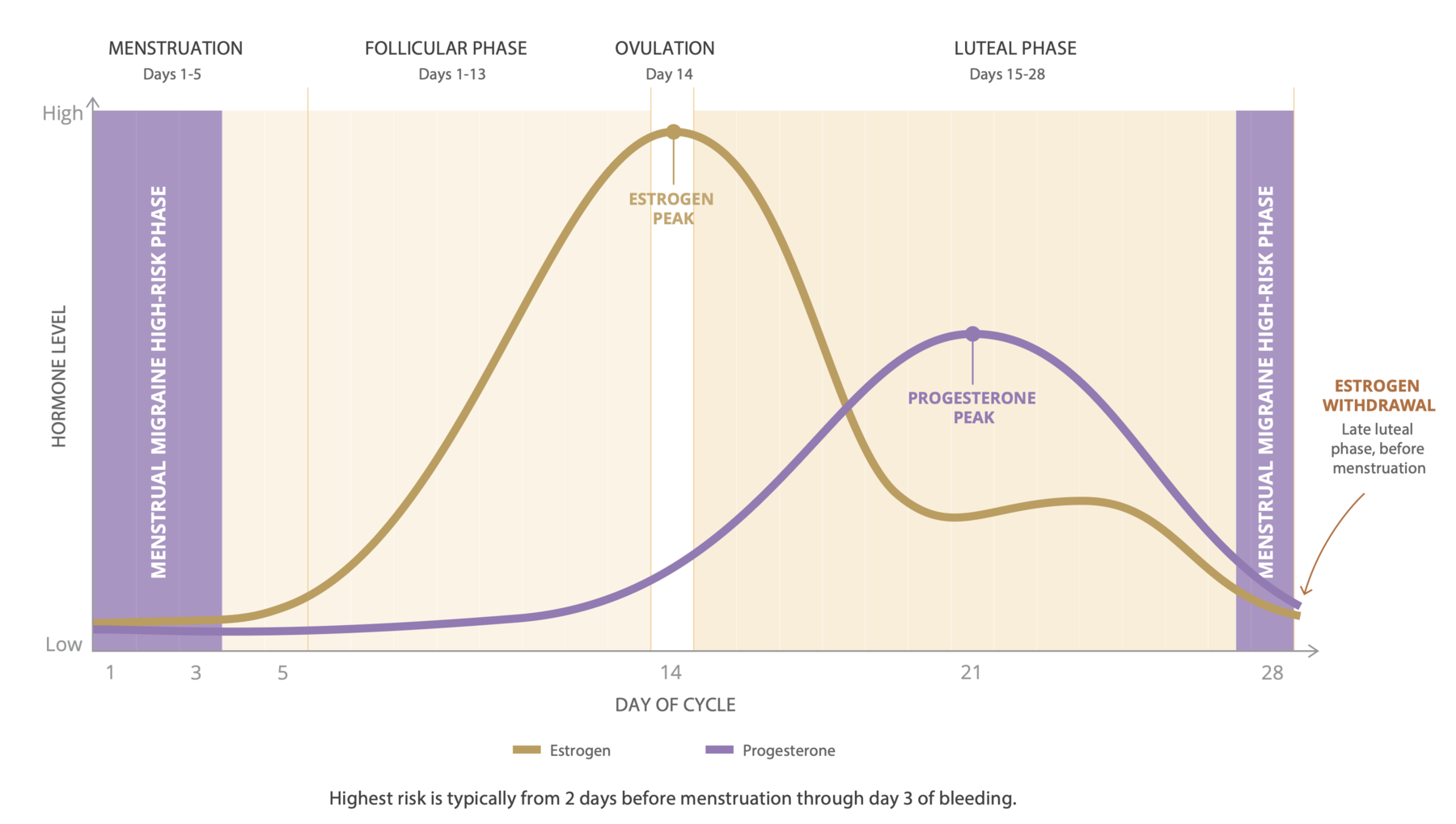
In the days before your period, estrogen falls sharply. For many women that drop is a powerful migraine trigger, which is why attacks cluster in a predictable window around menstruation. Estrogen also interacts with CGRP, a key molecule in migraine, which helps explain why hormonal shifts across life can change your attacks.
Estrogen and progesterone levels during the menstrual cycle
Interactive guide
Tap a day or phase
The chart starts as the original image. Choose a day, slide through the cycle, or use a phase chip to see the relevant hormone and migraine-risk context.
How hormones affect migraine across life stages
Select a life stage to learn how hormonal changes affect your attacks and what you can manage with your provider.
Attacks often arrive in the two days before through the first three days of your period. These attacks can be longer, more severe, and less responsive to usual treatment. Because the timing is predictable, short-term prevention may help.
→Ask your provider about short-term prevention strategies timed to your perimenstrual window.
Combined hormonal contraceptives change your estrogen levels across the month, and the hormone-free week can trigger an estrogen-withdrawal attack. Some options steady those levels, while others may not suit you — particularly if you have migraine with aura.
→Ask your provider which contraceptive options fit your migraine pattern and aura status.
Many women find migraine eases in the second and third trimesters as estrogen stays high and stable. Attacks often return after birth as hormones drop, and again with the disrupted sleep of early parenthood.
→Ask your provider which acute and preventive options are safe while pregnant or breastfeeding.
The erratic hormone swings of perimenopause are a common time for migraine to worsen. Patterns often settle once periods stop and hormone levels stabilize after menopause.
→Ask your provider whether hormone therapy could help or hinder your migraine during this transition.
What you can do
Because menstrual migraine is predictable, it can be planned for. There are options beyond over-the-counter pain relief, including prescription treatments taken when an attack starts and short-term preventive approaches used around your period. Some migraine types differ, so it is worth asking your provider what fits you.
Remember
Frame these as questions to raise with your provider — not as self-directed advice. A provider who understands your pattern can help you build a plan that fits your cycle.
National research
New national research on menstrual migraine
In early 2026, Migraine World Summit surveyed 225 U.S. women who experience migraine around their period. Six findings stood out.
The diagnosis gap
Women whose migraine is clearly tied to their cycle often do not have the diagnosis that could unlock cycle-specific care.
The treatment gap
36.4% have never been prescribed anything specifically for period-related attacks.
The predictability paradox
95.5% can predict their attacks, but 70.2% are not using short-term prevention.
A systemic burden
60.4% lose three or more days every cycle, affecting both their work and home lives.
A lifelong condition
84% report their migraine has worsened at some other life stage, often perimenopause.
The validation deficit
Across 162 open responses, being dismissed was the single most common theme.
Read the full report
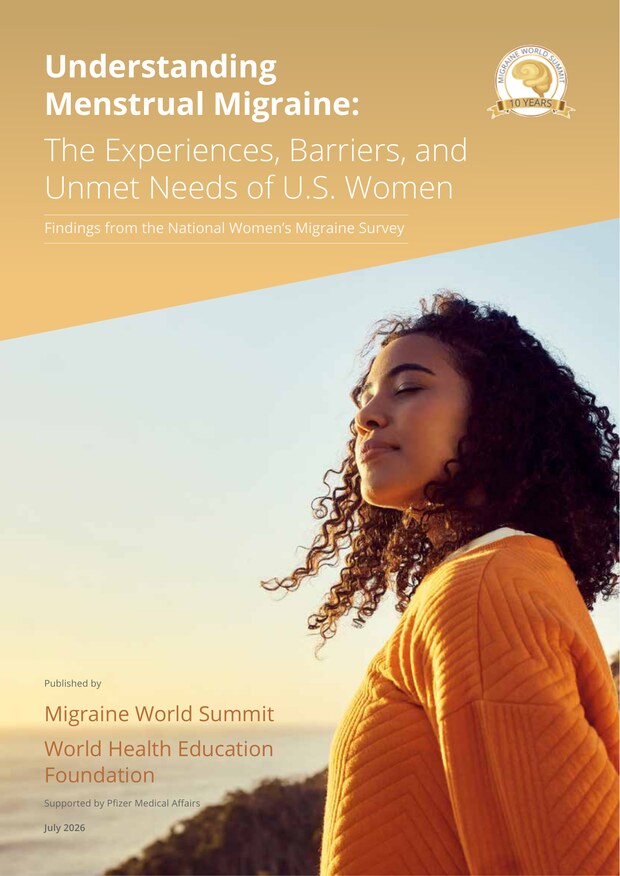
Understanding Menstrual Migraine: The Experiences, Barriers, and Unmet Needs of U.S. Women brings together survey findings, expert insight from Migraine World Summit faculty, and the latest evidence on hormonal migraine.
Read the whitepaperExpert insights
Insights from leading headache specialists
Short clips from Migraine World Summit interviews with world experts in women's migraine.
Dr Jelena Pavlović
Associate Professor of Neurology, Albert Einstein College of Medicine
“Migraine Hits Women Hardest in Their Busiest Years”
Professor Anne MacGregor
Centre for Reproductive Medicine, St Bartholomew’s Hospital
“Believe the Patient: Menstrual Migraine Is Real”
Dr Susan Hutchinson
UCNS-Certified Headache Specialist, Haven Headache and Migraine Center
“The Hallmark of Perimenopause is Unpredictability”
Dr Christine Lay
Professor of Neurology, University of Toronto
“Women with Migraine May Experience More Extreme Estrogen Drops”
Dr Jessica Ailani
Director, MedStar Georgetown Headache Center
“Why Hormone Testing Usually Won’t Give You Answers”
Dr Christine Lay
Professor of Neurology, University of Toronto
“Managing the Perimenopause “Avalanche””
Professor Anne MacGregor
Centre for Reproductive Medicine, St Bartholomew’s Hospital
“Starting HRT Too Early Can Make Migraine Worse”
Professor Anne MacGregor
Centre for Reproductive Medicine, St Bartholomew’s Hospital
“HRT for Migraine: Use the Lowest Effective Dose”
Dr Jelena Pavlović
Associate Professor of Neurology, Albert Einstein College of Medicine
“Stop Menstrual Migraine Before It Starts”
Dr Jessica Ailani
Director, MedStar Georgetown Headache Center
“Don’t Wait for Menopause: Treat Migraine Aggressively Now”
Dr Susan Hutchinson
UCNS-Certified Headache Specialist, Haven Headache and Migraine Center
“The 2/3 Statistic: Why Migraine Frequently Improves After Menopause”
Dr Jelena Pavlović
Associate Professor of Neurology, Albert Einstein College of Medicine
“Migraine is Debilitating, But Help is Out There”
Play any clip here without leaving the Hormone Hub.
Free course
Understanding Hormonal Migraine
Want the full picture? Take this free, on-demand eCourse to better understand hormonal migraine, treatment options, and how migraine can change through every stage of life.
Enroll in the free courseTopics covered
- 1Hormonal influences on migraine
- 2Birth control and reproductive health considerations
- 3Pregnancy and postpartum
- 4Perimenopause, menopause, and hormone replacement therapy
- 5Menstrual migraine treatment options and short-term prevention
- 6When and how to seek clinical care
It is REAL. “My symptoms were dismissed for years. I was told it was 'all in my head' or 'just part of normal periods.' This caused me to suffer physically and mentally.”
— Survey respondent, age 40 · began experiencing migraine at age 17
Free email series
Five short emails. One clearer plan, and a guide for your next appointment.
A free, supportive series that turns what you have just read into steps you can act on, ending with a printable guide to help you get the most from your next provider visit. One email every few days.
- 1Understand your migraine cycle
- 2Recognize your hormonal triggers and track your pattern
- 3Know your management options, from acute treatment to short-term prevention
- 4Know what changes across life stages
- 5Prepare for your appointment: your free symptom tracker and discussion guide
Included in Step 5
The final email delivers a free, printable symptom tracker and appointment discussion guide — what to record before you go, and the questions to ask so you and your provider can build a plan that fits your cycle.